The Creation Spirituality Lineage Calling All Social and Environmental Activists, Mystic Explorers, Justice Makers, Cosmic Thinkers, Earth Keepers Daily Meditations with Matthew Fox |
By Gianluigi Gugliermetto 3/20/2026 |
My cousin Paolo died two days ago. We celebrated his funeral today. |
At
communion, we sang a hymn whose words go back to the 14th century. This Latin hymn, a staple of traditional Catholic spirituality, has known an extraordinary success worldwide in Roman Catholic churches in the last few years, through a very simple and moving musical version written by Msgr. Marco Frisina. |
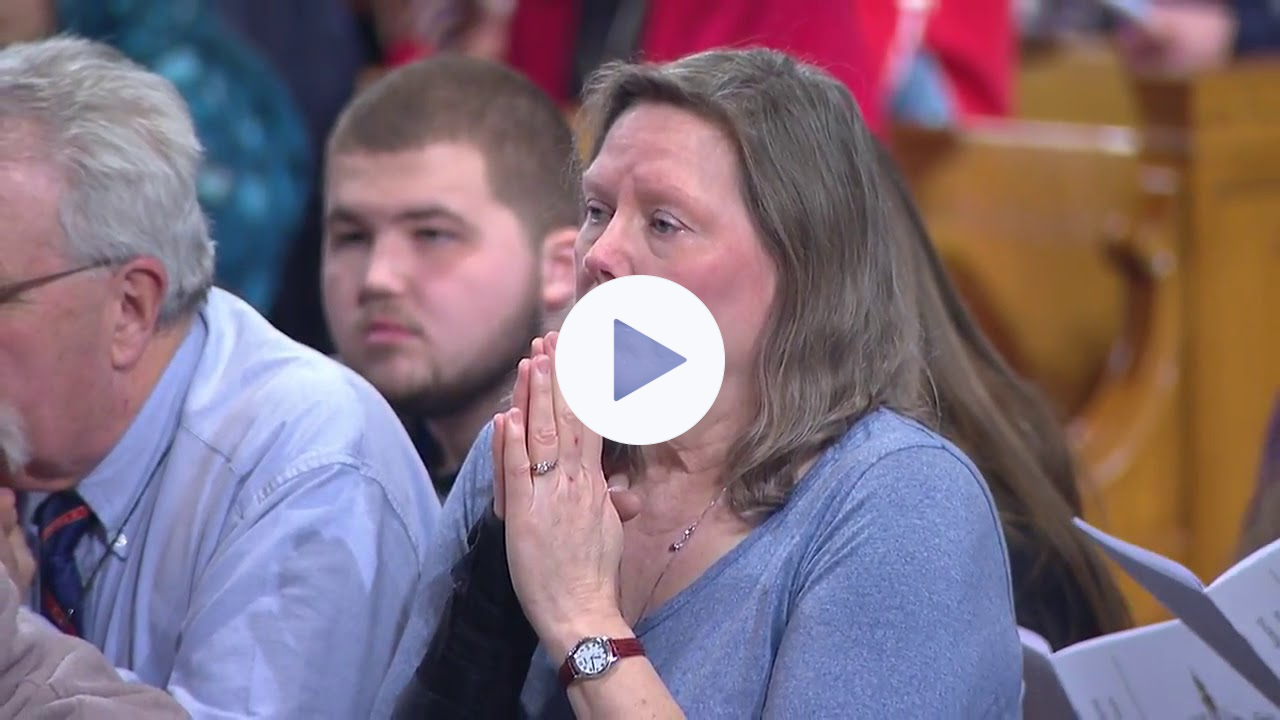
“Anima Christi,” composed by Msgr. Marco Frisina, sung by the Choir of the Basilica of the National Shrine of the Immaculate Conception at the closing Mass of the National Prayer Vigil for Life. Ad te levavi animam meam. |
At first
sight, a Creation Spirituality theologian should not be interested in this text. Filled with references to the Passion of Christ, it can be easily used to instill a faux piety based on the glorification of suffering. Here is the text: |
Anima Christi, sanctifica
me.
Corpus Christi, salva me.
Sanguis Christi, inebria me.
Aqua lateris Christi, lava me.
Passio Christi, conforta me.
O bone Iesu,
exaudi me.
Intra tua vulnera absconde me.
Ne permittas me separari a te.
Ab hoste maligno defende me.
In hora mortis meae voca me.
Et
iube me venire ad te,
Ut cum Sanctis tuis laudem te
in saecula saeculorum. Amen. | Soul of Christ, sanctify me.
Body of Christ, save me.
Blood of Christ, inebriate me.
Water from the side of Christ, wash me. Passion of Christ, strengthen me.
O good Jesus, hear me.
Within Thy wounds, hide me.
Separated from Thee, let me never be.
From the malignant enemy, defend me.
At the hour of death, call
me.
To come to Thee, bid me,
That I may praise Thee in the company of Thy Saints,
for all eternity. Amen. |
My interest in this prayer began when I first heard Frisina’s version, and I observed the deep emotional reactions of people singing and hearing it. Why — I asked myself — does this particular combination of text and music hold so much power? Indeed, I was touched by it, even though I felt that the pitfall of sentimentalism — the major enemy of healthy spirituality — was very close. |
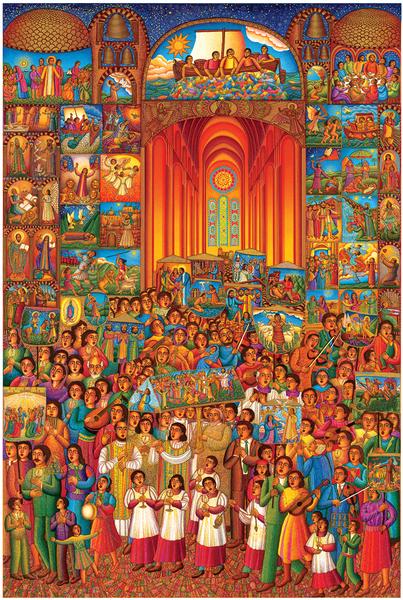
Communion of the Saints: The Procession, by John August Swanson, from Art in the Christian Tradition, a project of the Vanderbilt Divinity Library, Nashville, TN. Copyright 2007 by John August Swanson. Used with permission. | A cosmic element
is present in this text, as the faithful individual hopes to be called after death in the company of the saints and Christ himself — I would say “the ancestors” to clarify the anthropological meaning of this point. Many times indeed, during these days of grieving for my cousin, people have referred to his joining the company of those in the family who have already died, such as my own mother and father. Yet in the main, this prayer talks about the humanity of Christ, not his divinity. The starting point, the soul of Christ, is a peculiar element. Since the 5th century, |
Catholic
theologians elaborated the notion that Jesus Christ had a human soul, that is, he was not just a human body conjoined with the divine spirit, but a person fully endowed with all human faculties, such as thinking, feeling, and moral agency. Yet prayers mentioning or even addressing the soul of Christ are rare. The other human elements of the
person of Jesus that this prayer references are his body (broken), his blood (poured out), the water flowing from his side together with the blood (when his heart was pierced), and finally his wounds. It is a depiction of extreme physical and mental suffering, enhanced by the very fact that Jesus had a human soul capable of human suffering. The believer, however, is not invited to imitate the suffering of the man Jesus. On the contrary, the believer asks to be saved, sanctified, washed, inebriated, comforted, and finally sheltered within the wounds of Jesus. There is ecstasy here, together with a deep yearning for peace. There is a beseeching to the divine Jesus, but no explicit reference to the risk of damnation, or punishment and torments, which one might expect from a late Medieval text.
Truly, Christ in this prayer is both fully human and fully divine. In other words, I see this prayer as a deeply spiritual version of the Christological dogma. |
Putting together my exegesis of the text, my inquiry into several video versions of Frisina’s musical version, and my own experience in-person, I can say that the reason for the success of this prayer today is our need for a deep emotional connection to our wounded humanity, through which we can glimpse the divinity. The via negativa of Creation Spirituality — much different from suffering for its own sake, or suffering as payment for one’s mistakes to a cruel divinity — is the main key to breaking the impasse into which humanity has gotten itself, at least in the West. It can be paralleled to Jung’s notion of feeling. Unless we feel |
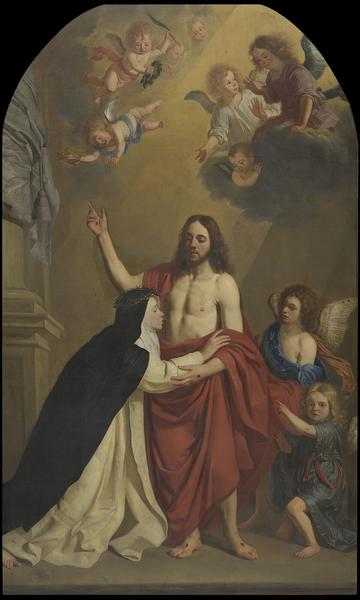
Compassionate devotion: “Saint Catherine of Siena Kissing the Wounds of Christ.” Painting by Antoon van den Heuvel. Wikimedia Commons |
our
pain deeply and therefore the pain of others — humans and all others — there is no hope. Is there such a thing as a “saving suffering”? When answered in the affirmative, this question has often led to the glorification of suffering itself, which is abhorrent to any healthy-thinking person. But the notion of a firstborn brother among
many (Romans 8:29) who has entered and exited the gates of hell, who can be compassionate because he has known deep human suffering (see Hebrews 2:18), is a piece of wisdom coming from the earliest Christian sources which we would do well to consider. We need people who understand our pain, and these are the only people who have travelled through their
own pain. But when this happens, when our suffering is welcomed and embraced, it is not only our humanity that is involved. There is something in this kind of compassion that is truly divine. |
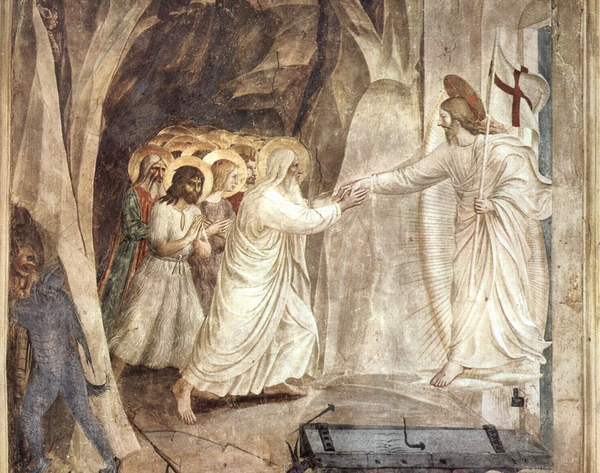
Banner Image: One who has passed the gates of hell and can relate to suffering: before his resurrection from the dead, Jesus Christ grants salvation to souls by the Harrowing of Hell. Fresco by Fra Angelico, c. 1430s. Wikimedia Commons |
Queries for Contemplation What is your experience with your pain being embraced, and with you embracing the
pain of others? |
Responses are welcomed. To add your comment, or read other comments and enter into dialogue, please click HERE to go to our website and scroll down to
the Comments field. Books and More by Matthew and Friends! Be sure to check out Matthew's new store at MatthewFox.org, now offering books, recorded courses old and new, and special events... and don't miss our growing collection of books endorsed by Matthew on Bookshop.org! CREATION SPIRITUALITY CONVERSATIONS |
Matthew Fox
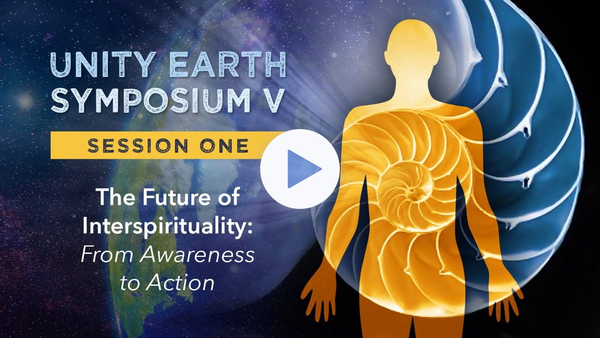
offers a keynote at the Unity Earth Symposium V on The Future of Interspirituality: From Awareness to Action, exploring the maturation of interspirituality and how shared spiritual awareness becomes structured, embodied action in the world. |
|
UPCOMING EVENTS See Matthew Fox's full calendar HERE |
Join Matthew Fox and Carolyn Myss in a 3-session live-streamed event hosted by The Sophia Institute: "Darkness, Love and Advancing Consciousness in These Times." Wednesdays, March 11, 18, 25, 3pm PT. Learn more HERE. |
|
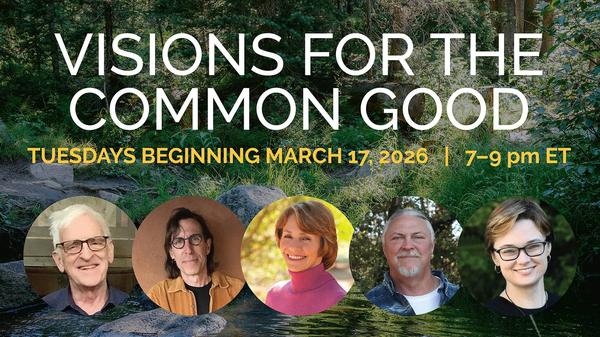
Matthew Fox joins David Abram, Lynn Twist, and Randy Woodley as Cameron Trimble of Convergence CoLab hosts “Vision for the Common Good,” a four-session Conversation Series. Tuesdays, March 17, 24, 31, and April 7, 4:00pm-5:30pm PT. Register HERE. |
|
MONTHLY: Join Matthew Fox and Skylar Wilson of the Order of the Sacred Earth in a free virtual meeting for connection and networking with other mystic warriors. Last Tuesday of every month, 4:00-5:00pm PT. Join Zoom Meeting HERE, Meeting ID: 886 6530 2478 Learn more at www.orderofthesacredearth.org |
Matthew Fox offers a lecture, “A Christianity for All Creation” as part of “For All Creation: A Day with Matthew Fox, Kelly Sherman-Conroy and Will Allen,” an On-site and Virtual Event presented by the Center for Ecological Regeneration, Hennepin Ave. UMC, and Garrett
Evangelical Theological Seminary in Minneapolis, MN. Saturday, April 18, 9:00am – 3:00pm. Register HERE. |
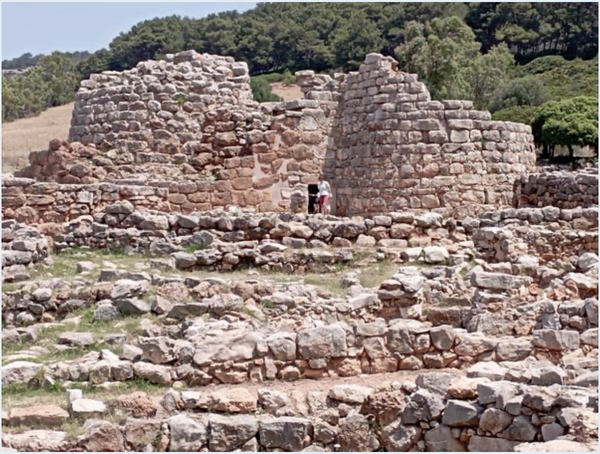
Awakening the Divine Human: An Immersion in the Living Wisdom of Creation Spirituality: a week-long retreat in Sardinia, Italy, May 25-30, 2026 Join us on the sacred island of Sardinia for a deeply immersive 6-day retreat rooted in the teachings of Matthew Fox, C.G. Jung, and the ancient wisdom of the land. Set
along the turquoise shores and among the Neolithic sites of this timeless Mediterranean island, this retreat invites you into a transformative journey of reconnection—with Earth, Self, Gender, and the Divine. Learn more HERE. |
|
Inspired by this post? Share your insights on BlueSky, Instagram, Universeodon, or Facebook using the hashtag #RevDrMatthewFox and tag Matt with @RevDrMatthewFox FOLLOW MATTHEW FOX: |
|
|
|